Categories
Victory

Consistency is in the doing

In our last post we talked about how consistency is powerful when it came to our behaviour and choices we make as we navigate an unprecedented time of disappointments and seemingly lack of control in most areas of our life.

Another aspect to consistency is how we deal with stress and what feels like blow after blow of COVID related frustrations and disappointments. When we went through an incredibly stressful time in our lives about 4 years ago, my Dad made a comment that I’ve never forgotten. He simply said “beware the of the layers”. After that comment we talked about how stress and external pressures sometimes are a bit onion like layers upon layers.

What I am hearing more and more in this COVID season, is mental health across our nation is in sharp decline and in all honesty I am not surprised. When we start to talk to anyone around us, it seems the layers of worry, stress and anxiety comes out in both words and facial expressions.

I was listening to a pod cast yesterday where the speaker said, the 18 months to 2 years of COVID gives us what scientists call pandemic brain. The amount of decisions and stress our brains have dealt with over this time period is equivalent to 10 years – no wonder we feel tired. (Podcast: Miracle in the Mismatch)

So, how do we stay consistent in the middle of this unprecedented time?

Talk

  • Talk about what measures you can take as an individual and family to bring the stress and anxiety down. This may also be a conversation to have in the workplace also. Think about the stressors in your life, write them down – acknowledge them – then talk about how it could be changed from a stressor to neutral or even better from a stress to a source of strength and motivation. Talking is not easy – but it will get you thinking out loud, you’ll be processing it with some one else and brainstorming together.
  • Talk to someone who can help you make sense of your stress – whether it is a friend, family member or professional – just start talking – get support and the help you need. Their is no shame in dealing with stress, pressures and anxieties.
  • Talk about bringing back the fun. COVID has dampened many plans and exciting things we thought we might be able to do but can’t. At the moment I am lamenting travelling but as a family we brought back the fun and started listing places we could go based on our names. Sounds kind of not fun and a bit silly, but we enjoyed looking up places, dreaming about what some places would be like etc… It is a list we could never afford to fulfill but it gave us some fun and allowed us to dream.

Do

Now that you’ve talked about the serious stuff and everything in between – it is time to take action. Make a list of actions – plan your actions – motivate yourself to fulfil your actions. To give you an idea – as a family we talked about how we are talking to each other could be improved. Our action was to learn about left and right brain and how we flick sides in the use of our brain when we are angry for example. We learnt ways to flick back to calm ( at least calm-ish) and have been practicing that. It has reduced a layer of stress in our home. It was just one way we could remove a stress from the stress column in our minds and move it to neutral.

Keep Going

You’ve got this. None of us were prepared back in 2019 for what 2020 to now would bring – to ourselves, our families, our city, our nation and world. All of us have been touched some how, impacted some how by COVID.

Once you have talked and started to do – keep going. Keep finding ways to bring back the fun, to turn stressors into neutral. Give yourself some grace, allow your self to be sad, be tired, be hurting – but remember to pick yourself up and keep going. One step in front of the other is all it takes. Just take one step at a time. You’ve got this.

What are some ways you are trying to keep yourself even keeled? How are you working towards being consistent?


Categories
Victory

Puppy Power

So we have joined the puppy bandwagon. After listening to the pleas and a 30 minute power point – yes you read correct – aimed at convincing us to say yes to a new family member – we finally caved.

Say hello to Scout. Cute to look at and puppy like in every. single. way. The interesting thing about introducing a pup into the family – is the ”not yet trained” part. The kids especially my youngest cannot understand why the pup is not sitting when asked, not shaking hands or even listening to when her name is called. All of these things and more need to be learnt. We as humans need to learn things, we begin learning the minute we are born. Our brains are so incredible. Trying to explain to the kids, how the pup is untrained, and unknowing has been an interesting process. These conversations have been met especially by our youngest with questions like “why not”, “how can I teach her” and her simply repeating herself until the pup loses interest and runs off…

How many times in our lives have we come across people ahem others, who are ‘untrained’ or not trained yet like my pup? (Rest assured she is going to puppy school!) When we come across those in our lives who don’t know what they don’t know – how do we treat them? How do we perceive them? Do we give them grace, the same way we give an untrained pup? Do we use patience and care to teach them, show them, mentor them, encourage them?

So here lies the challenge – we all have areas in our lives that we don’t know what we don’t know… How will we respond to those who show us our blind spots – the areas we need to improve ( be trained in)? Likewise how will we treat those who like us, have blind spots? The answer I dare say is with kindness, grace and a whole lot of patience.

What are your thoughts on this?

Categories
Victory

The hard question

I’ve worked in various roles that have always involved at one time or another – asking a hard question. It could be asking staff if they feel their behavior is appropriate, it could be asking a customer if how they are speaking is beneficial to the situation, it could be asking management to reconsider their decision… but when I get asked a hard question it’s a whole other level of feeling uncomfortable.

You see what I find the hardest question to answer is – what are you afraid of…How did you react to reading that? Is it a hard question for you to answer?

I used to think it was easy… snakes was always my first response. I know I’ve grown up in Australia where snakes are just a thing, to be honest I’ve only ever come across about 5 in their natural habitat. None of which were aggressive – but that fear still exists in my psyche.

Now… I feel it is such a reflective question – where at times we can bury our greatest fears in our goals and ambitions, our actions and thoughts. When I drill down past my fear of snakes – I get to a point where I fear failure – I still see it as negative… brushing past that – I fear that I won’t raise my kids well… do you see where I’m going with this??

We need to ask ourselves the hard question – not wait for someone else to challenge us – but really take time and take an honest look at what we fear? Why – so we can conquer it and look forward without fear and without any anchor dragging behind us.

As a leader it’s so important to lead your team – whether in the workplace or as a family on this journey as fear holds us all back in some form. With that said as a leader it is so valuable to be vulnerable and answer that question for yourself. Not with a 10 second answer like my snake answer – but a well thought out reflective answer. It may just change the way you lead for the better.

Ask the hard question in your home and in your sphere of influence. You may not get to hear the answer – or you may – but remember that fear is like an anchor dropped in the ocean – dragging behind you, slowing you down every time you reach up towards that goal. Don’t be held back. Name the fear – learn from it – grow from it and use it to fuel your motivation rather than hold you back.

Categories
Victory

Learning to lead using freedom

We’ve just had a week away camping at the beach. We feel incredibly blessed as where we live Covid restrictions have lifted to the point where we could do this, as it is our absolute favourite thing to do.

Every time we camp on the drive home we chat about what improvement we could make to the set up and experience. Bit by bit we add to our camping gear to make camping that little bit more organised, enjoyable and easier.

The addition to this trip was a set of walkie talkies… our kids don’t have phones ( they’re 10,8 and 4) and our camping trips are screen free as much as possible. We take bikes and scooters and love to give our kids freedom to ride, play and meet other kids so these walkie talkies were perfect. They allowed them freedom with boundaries. We could relax knowing we could contact them.

Reflecting on this camping trip we realized our kids had learnt some valuable lessons by being given freedom. All of which contribute to their developing leadership skills.

  • Confidence: They could choose where they went knowing we could still keep them safe and were available if they needed us. The walkie talkies gave them the confidence to be apart and meet up again as they chose.
  • Communication: This section was three fold. 1) The kids were able to communicate with us, when they wanted , and thought through the process before contacting us. 2) They communicated with each other clearly and decisively – as they were having too much fun to spend too long talking. 3) Having a communication tool on hand made them feel safe – while having the freedom to explore together or alone. The fun part was the kids allocated every one a bird name as our ‘ code name’ for the walkie talkies. It added humour and fun to the conversations.
  • Decision making – they knew the boundaries of where we stayed and knew to stay within them. They did explore further – but communicated that to us first. We showed trust in their decisions and they in turn displayed communication and trust.

Without even knowing it, they spent the week learning a different dimension to their current leadership skills. The freedom we gave them – along with the trust, gave them the confidence to do what they wanted to and explore.

Likewise in the workplace- we too can give freedom to our staff – possibly not with walkie talkies on a camping trip, but freedom within their role – as we observe mentor – freedom for some – opens up so many possibilities and will get the creative thoughts flowing.

What ways can you build freedom into your family life?

What ways can you build freedome into your staff?

Categories
Victory

Tetris = next level resource allocation.

Working with resource allocation can be tricky, firstly working out the needs and wants, navigating the decision making process, communicating the final decisions and getting the team leaders on board to then be able to run with what they have.

During this season, creativity is entering into the most rigid of processes and encouraging ‘do more with less’ outcomes because of necessity. I have been pleasantly surprised by the significant changes, this season has almost forced upon workplaces and staff for that matter. Even though I have been personally impacted by reduced resourcing I am none the less impressed by the changes outworking during this season. The collaboration out of necessity, the shifting of mindsets,the ebbs and flows of decision making and project delivery methods. It is incredible to be apart of and also witness in the businesses around my city and the world.

In applying these creative methods to our home lives, it may be out of necessity due to reduced finances, or drastic changes in routine, it is interesting to note that out capacity seems to have adjusted and our mindsets have flexed also.

When allocating resources to projects and business as usual tasks I often visualise the game of Tetris. How should the resources fit to have the best outcomes. I must admit to needing some brain breaks lately to order my thoughts and have found myself playing Tetris. Somehow, while lining up the blocks, I am able to creatively work out the solution to the real life resourcing issue at hand. No longer, is it a game I played as a kid, competing to get the highest score, but now its gone to a whole new level of helping me work through resources allocation dilemmas.

What ways has this season forced you to be more creative?

Aside from the negative impacts of this season, what are some positive changes that have occurred?

Categories
Victory

Thank you Superheroes

Here in Australia it’s Fathers Day!

Thank you to all the Dads, Grandpas, Dads to be, uncles and brothers.

You are all super heroes – to your loved ones.

We honor you today for the special role you play in the lives of your family and friends! It wouldn’t be the same with out you.

To those who have loved and lost, may your hearts be reminded of the big bear hugs and the joy your Dad brought to your life- be it a little or a lot.

To our Homes of Victory Dads – you have taught us so much and so generously shared your wisdom with us. May we continue your legacy in the life of our family – showing grace and patience, bringing the fun and joy while leading and mentoring the next generation.

Categories
Victory

All – rounder…

I was flicking through a book titled 50 leaders who changed history, by Charles Philips and came across the list of what the author identified as leadership qualities. Some of which I have not really considered prior, as I have only worked in the social science field. I am used to traits such as open mindedness, collaborative and leading by example – these are the softer (yet strong qualities) that do get things done. Adding to the list of leadership traits listed include being disruptors, combative and defiant type leaders. After reading through the short bios of each leader, it became clearer to me that their type of leadership whether with the hindsight of history, whether they were right or wrong, on most occasions their leadership style befitted the change in history they contributed to.

Mother Teresa for example – was a ‘lead by example’ leader, Margaret Thatcher was considered a ‘combative’ leader. Pablo Picasso was mentioned for his ‘innovative’ leadership style – he was credited with challenging the limits of art and bringing art into mainstream culture. This book is a fascinating read of leaders throughout the generations.

Reading about the various types of leaders and the particular style they were known for, I was challenged about my own leadership style, both in the workplace and at home. You see, we may know what type of leader we are in our own situation, but do we have in us, some of the opposite qualities to enable us to truly lead in all situations?

With that said, I am more aware of making sure the leader, I have worked hard to be, is not done growing yet. I need the capacity to be a disruptor – at the right time. I also need to learn more combative traits – to pull out at the right time. What about you?

When was the last time, you were challenged to adapt your leadership style? Did you have the tools at hand?

Take some time to give some thought to how you can become more well-rounded. There is nothing like being prepared for all situations…

Categories
Victory

Kid Speak: Curiosity

The topic I asked a 10 year old in my life to write about was: Curiosity and why it is important. Here is the response…

Why It’s Good To Be Curious In AND About Your Surroundings… by MGT

I think it’s good to be curious about your surroundings, say your house or school/work because curiosity leads to more questions, which could eventually lead to an invention that could help/save lives. With curiosity you can actually experience more. If you were curious you would want to know what an event might be like, or you might discover something important and be known for it. With curiosity you can achieve great things. I’m going to give a few examples of famous (and curious) people.

  1. Grace Hopper: Being a mathematician in the US Navy, Grace was a pioneer in developing computer technology. She helped create the first electronic computer and achieved many other things. That was all due to her thirst for knowledge and her curiosity in life.
  2. Ada Lovelace: This 19th Century Countess was the daughter of famous poet Lord Byron, who she never knew. She’s also considered the first computer programmer. Her boundless curiosity extended from maths to music and foreign languages. The curiosity is what led her to meeting Charles Babbage and they worked together to create the calculator and write many more programs.
  3. Amelia Earhart: One of the world’s most celebrated aviators and explorers, Amelia was an international celebrity in her time as the first woman to fly solo across the Atlantic Ocean. She used her fame to encourage women to reject constrictive suitors and to pursue as many opportunities as they could. Earhart’s curiosity made her famous and she also stood up for women who were facing inequality in the world at the time.

From this you can tell, this 10 year old in my life is well read and incredibly curious. So what can we learn from this response to curiosity…

Read widely, learn about people and learn from people. You never know where being curious will take you.

Thanks MGT for your insight.

Categories
Victory

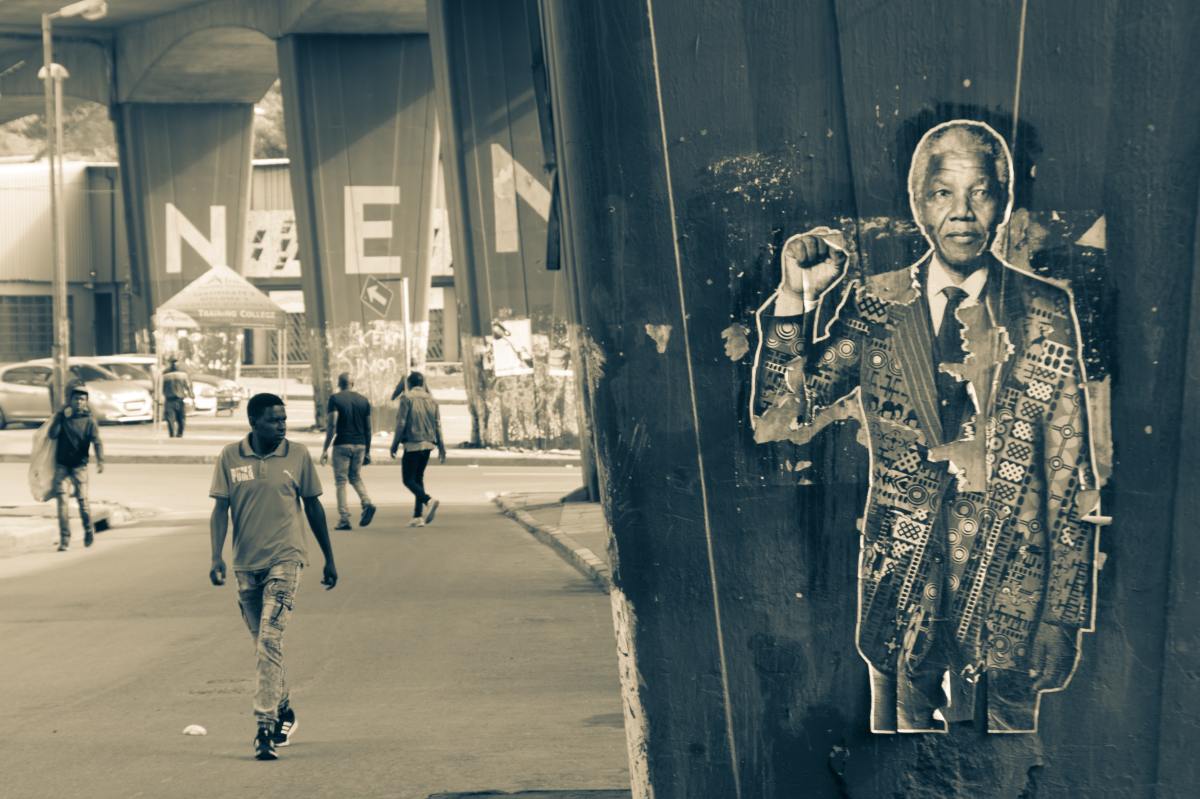
Shaping Leaders: Nelson Mandela

Growing up I was obsessed with Nelson Mandela. To me, he was a hero. I’ve always had a social conscience and never understood how segregation based on colour could happen. Perhaps as a child I was naive, or perhaps I was raised learning what loving thy neighbour really meant.  Either way, I loved reading about how he achieved what he did, how he never let his fervour for change diminish. He always had the greater good in mind. He was in my eyes a great example of what one person can do, with their choices, actions and words to literally change the world. 

Whatever your opinion is of Nelson Mandela, his life, his journey, his sacrifice of ‘ normal’ – we can all learn a thing or two from him. Here are the top five things I’ve learnt from his life: 

1. There is power in forgiveness – Nelson Mandela, didn’t let his imprisonment or how he was dreadfully treated rob him of his joy. He chose forgiveness as it would allow him peace, and allow him to continue to work tirelessly. Be the one to take the first steps towards peace, and forgive. It’s not easy, but worth it.

2. It’s not about me – Look with vision at the next generation and the ones to come after that. At times we can be so consumed with the task at hand, we forget to look at the bigger picture. What will your influence be, your legacy, your capacity to impact for good? 

3. It only takes one – One man stood up, and fought for the rights of those around him, soon he was joined by more and change eventually followed, after oppression, imprisonment etc… Are you the one, to make the change, to have the passion, to have the determination to bring about improvements in your sphere of influence?

4. Influence is precious – use it for good. We may never know who we influence how, but it is our responsibility to try our best to influence those around us for the best. Set the example, make the sacrifice and never underestimate your influence. 

5. No season is ever wasted – being sent to prison for standing up for what is right, for what you believe in is no easy feat for Nelson Mandela. In life, seasons good and bad, come and go use each season to learn and in time, wisdom and experience will be your fuel to get through.

I may not be able to portray the magnitude of impact this one man’s life has had on humanity. What I can do is learn from him and apply it to my sphere of influence. This world leader, has certainly shaped the kind of leader I want to be.

Categories
Victory

On the flipside

Here at Homes of Victory we are all about applying leadership and management skills to our home life – to improve it. Simon Sinek – the leadership master flips that on its head by saying 

The closest thing to leadership is parenting. You have to be an infinite student of parenting.

Simon Sinek

Here at Homes of Victory we wholeheartedly agree with this. On a practical level, I know I have used the same tactics I’ve used with my kids with difficult client..  I’ve even got to the point with one extremely difficult customer who continued to yell at me, I simply said, ‘I’m sorry sir, my children behave better than you. When you calm down, I can help you’. He stood in stunned silence in front of me, he took a step back, lowered his voice and replied ‘Really?’ All I could do was nod.

When we stop to think about what our children have taught us and how we have applied those learnings to our family and workplaces, it is amazing how intertwined the learnings are.

One thing, I’ve learnt from my children that I take into the workplace is a really positive attitude to problem solving and the ability to put issues into perspective. After having children, and learning to live life in the fast lane when it comes to scooting out the door for school. The problems I’ve solved in less than 20 seconds, astound even me. I have the ability to pack leftover breakfast, gather my children and get them walking – with shoes on – do I get an amen to that!, to the vague location of the car, while dealing with milk dropped in the fridge without even breaking a sweat. These issues are not life or death – they just require perspective.

Another thing I have learnt from my children is around expectations. I have high expectations of myself and also expect high behaviour levels from my children. I was finding in the workplace I too, placed high expectations of staff – at times – higher than necessary, higher than what was fair. By learning what are fair expectations verses unrealistic ones, I am a better parent and better leader.

What are some things your children have taught you, that you were able to use in the workplace? 

I’ll leave you with one more quote, to stir your thoughts, 

Leadership is not a title, it’s a choice. Leaders take care of those in their care.

Simon Sinek

Categories
Leadership

Shaping leaders: Shimon Peres

I am a self-confessed people watcher. To the point when I’m out for dinner or with friends I like to sit where I can see the most action. I have been known to stop sentences abruptly, while watching someone walk past, fascinated by them. I have even been caught by my husband not paying attention to a conversation, as I am too busy wondering about the life of the person running past. To that end, I love history and learning from historical figures and making observations about the learnings or not of the past.

At times, I feel as a society we are not the best at learning and implementing positive change, from the learnings of the past, but alas we should try to.

Lately I have been engrossed in the autobiography of Shimon Peres, No room for small dreams,. He is a historical leader and important figure in the creation of Israel as the state we now know to be. While I purposely do not take political sides as I do not know enough to do so, for me it is fascinating to read about how his life was shaped and how that in turn it shaped his leadership style. I have pulled out many sections of this book and have learnt so much from such an experienced leader. Here is what I have learnt so far…

  • Trust is a key to leading. (and people are like sheep…. Just saying…)

I was assigned a job that was my first true experience as a leader – not of men but sheep. Yet there were striking similarities: a shepherd for example may have authority over his flock, but that alone does not mean he can control it. … we had to find a common language, a common understanding… I had to know their fears as if they were my own, so I could understand where they could not be led- or at least when I’d have to move with more deliberateness. I had to be both empathetic and insistent in stating my intentions – a figure they would follow, even reluctantly, if only out of trust.

Shimon Peres
  • The value robust discussions.

When he ( referring to another leader at the time) had been most frustrated, most intent on walking away, he remained open to the argument made by two young men, with a mere fraction of experience and wisdom. He had nearly given up on the larger debate, but he had not given up on his belief in debate.

Shimon Peres
  • Listening breaks down barriers.

Listening is not just a key element of good leadership, it is the key, the means to unlock doors that have been slammed shut by bitter dispute and resignation.

Shimon Peres