Categories
Victory

The Line Through Obstacles

We are reposting a post we wrote back in 2020, it highlights some things we learnt as we spent our time navigating covid and learning to mountain bike. These lessons are still relevant today, and we are still thankful for this lesson we leant. Enjoy!

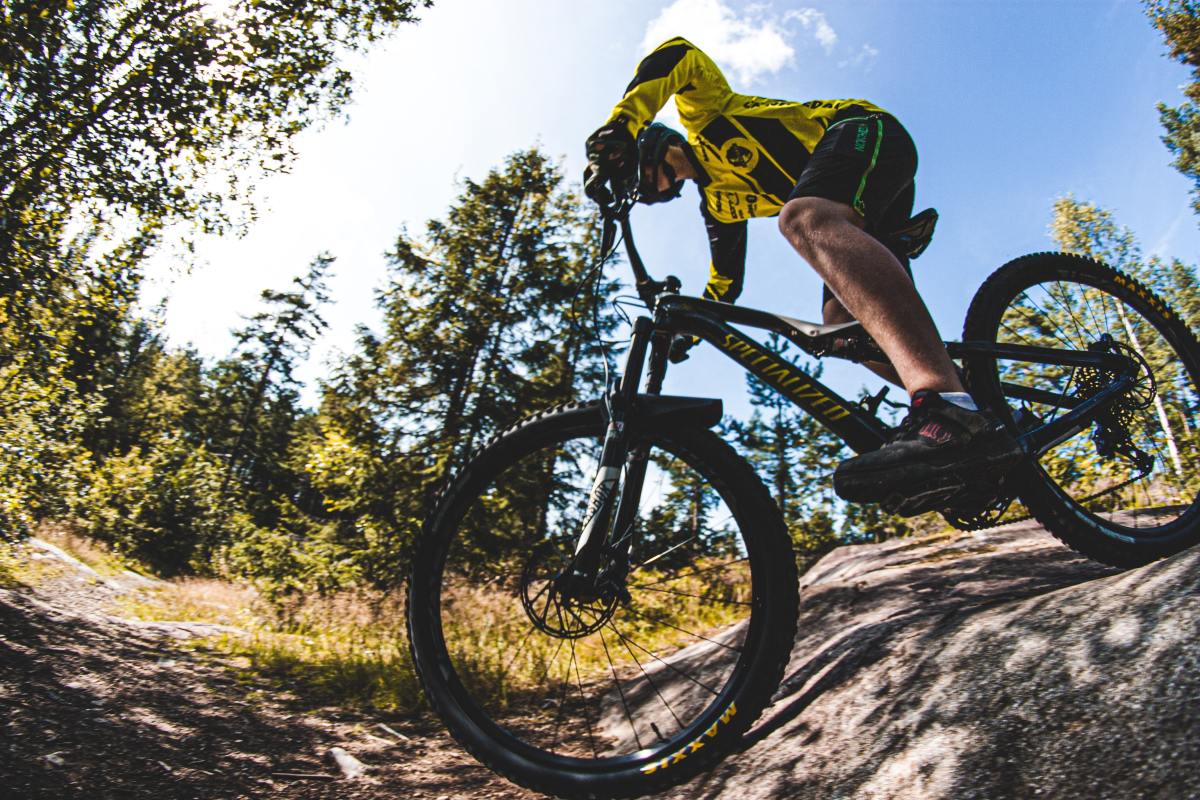
During ISO our family has discovered that the bush reserve we live near has a ton of mountain bike tracks. Almost every day we have been taking the kids on their bikes exploring the tracks. We have all learnt something very important on these bike rides.

When you are going up or down a large hill, on a dirt track full of gravel, rivets and eroded dirt, it is easy to give up. The obstacle in front of you can seem difficult, it would be easier not to bother.

Going down a large hill, can be scarier than going up a big hill. What we have taught our kids to look for at the top of the hill, is the path the bike wheels are going to take down the hill. We’ve taught them to look for the safest path to go down, avoiding the rocks, roots and whatever other obstacle is in the way. To think about the speed, they need to go down, take a breath and do it – confidently. Why? Because you’ve already chosen the path to take. In teaching them this, we have been able to talk about resilience and also looking for the path that leads them out of the obstacle. Every time, they roll down the hill and onto the flatter part of the track, the smile on their faces says – I did it, I knew I could, that was fun, I can do it again.

I am not belittling the challenges we are all facing in life at the moment, as many are life changing for individuals and families. What I am wanting to share is:

1) Don’t focus on the obstacle at hand. Look for the line, that potentially takes you through it.

2) Take your time. Spend some time in nature. Take notice of the little things and be inspired to relax, think clearly and rationally. Take deep breaths and breathe in all the things you are grateful for. It is easier to make decisions when you are not stressed and under pressure. Thinking clearly and slowly will benefit you and your family.

3. Think about the best path to take. When you are figuratively speaking at the top of a hill, think about the best path to take, and take a leap of faith.

You can do it.

Categories
Victory

Building Resilience

Resilience, in its finest form, is like wearing armour with our feet firmly planted, ready to do battle with the season we’re in.

When looking at the 5 pillars of resilience or what we as individuals can do to build resilience, these characteristics are very internal facing. They are: self-awareness, mindfulness, self-care, positive relationships & purpose. By equipping ourselves with these types of weapons and armour we will be better equipped to be resilient and remain resilient. I am guilty here of lacking in self-care… I tend to always focus on doing, rather than taking time out to just relax. You could say I’m good at burning myself out. I get bored when it’s quiet – can anyone relate to that? With time I am slowly learning to stop and take care of myself. 

What area do you need to work on to increase your resilience?

Another way to look at resilience or the qualities that work together to form resilience is known in psychology as the 7 C’s:

  • Confidence
  • Competence
  • Connection
  • Contribution
  • Character
  • Coping and
  • Control

Without some measure of these in our repertoire, we are not going to thrive in terms of resilience as well as we could. These skills can be learnt over time, and do take practice. With that said, we have added some practical ideas for ways to build resilience in yourself, your family and your home life.

Building Social Resilience:

  • Learn to communicate effectively
  • Learn to resolve conflict
  • Be present
  • Listen to one another
  • Care for one another
  • Look beyond yourself
  • Put yourself in others shoes
  • Learn to appreciate those around you and;
  • Use humor where appropriate

Building Physical Resilience:

  • Exercise
  • Participate in a sport or activity that stretches your fitness
  • Engage in activities that you enjoy and find relaxing

Building Mental Resilience:

  • Do not isolate yourself – stay connected to friends and family – those around you – even if you are physically isolated, do not disconnect from friends and family.
  • Ask for help when you need it
  • Be consciously flexible towards situations
  • Ask: What is your purpose and how can you fulfil this starting with everyday tasks
  • Learn new things – find things you are interested in and go through the learning process. 

Building Emotional Resilience:

  • Practice self-care – be kind to yourself
  • Learn to manage strong feelings
  • Be self-confident,
  • Be able to see the big picture
  • Pay attention to your own needs and feelings. 

Try some of these ideas this week and see how you go. Building resilience takes time and thought. It will also bring a greater capacity to see the world as a better place, and guide your leadership to a more positive mindset.

Categories
Victory

Under the microscope: Resilience

Resilience is the talk of the town here at HOV this week. Considering the year we have had – personally, as a community, as a nation and globally, I am sure we can all relate to the quest for finding resilience and remaining resilient through prolonged seasons of stress, overwhelming situations and isolation. Resilience is not putting happy pants on and doing a dance then being ready to face the day with a plastered smile on your face, resilience is so much more than that. Resilience at times can be treated with contempt, as we wonder what next, in our stressful situations. Resilience, however, will offer us a look into the positive, could-be’s and may-be’s that negativity does not allow for. Resilience, in its finest form, is like wearing armour with our feet firmly planted, ready to do battle with the season we’re in.

We all have varying levels of resilience, at times we may feel we have bucket loads, other times, we wonder where we can find more… So, let’s take a closer look at resilience, and why it is necessary, important, and critical to our home life, workplace and community. 

Resilience is defined as:

1.    The power or ability to return to the original form, position, etc., after being bent, compressed, or stretched, elasticity.

2.    Ability to recover readily from illness, depression, adversity, or the like, buoyancy.

In your home, resilience is vital for several reasons as it enables us to develop ways to protect against experiences that could be overwhelming. Resilience helps us maintain balance in our lives during stressful periods and protects us to a degree from developing mental health difficulties and issues.

In the workplace, resilience is a key strategy to enable us to tackle stress, competitive job markets, workplace conflicts and address challenges and change. Learning to be resilient in the workplace is so important as we often identify work as the number one stressor in our lives.

In community, resilience becomes all about the recovery from adversity and how individuals / families contribute to that.In Australia over the past few years we’ve had our share of devastating fires and floods along with the rest of the world weathering coronavirus– it has been a mix of grief at the loss and devastation but also a joy to see how the communities affected rally together and inspire the recovery efforts.

So, how do we go about building resilience, staying resilient and teaching those around us how to be resilient? To answer this question, we need to look at the types of resilience and where our strengths and weaknesses lie. Once an awareness of our current capacity of resilience, we can then build on this foundation.

We all experience ebbs and flows of resilience pending the circumstances around us and its severity – we are a work in progress on this too. The idea behind building resilience and staying resilient is reducing the difference between the ebbs and flows.

Start to think about what impacts on your resilience? This will become a key factor when increasing your resilience and staying resilient through the long haul.

I know when my kids were little, lack of sleep played a huge role in how resilient I felt. I remember one night, making a sandwich for my eldest, my husband innocently asked what I was doing, and I burst into tears…. Not very resilient hey – the reality was I was living on four hours of sleep a night and his lovely well intended question pushed me to tears… it’s funny now, but when I look back, all I wanted was the strength to get through each day. Have you been there? Are you living this now?

Here at HOV we are not experts in this field, nor claim to be, what we are interested in doing is giving you some pointers to get you started and support and encourage you on the adventure of building resilience. 

Before we get into the how to build resilience, it is important to note that there are four different types of resilience we can build:

  1. Physical
  2. Mental
  3. Emotional and;
  4. Social

All four areas in our lives require some level of resilience, as we face major life problems, situational problems, daily problems and what we like to call micro stresses. The little annoyances that build up, or the ones we see when we are in a negative head-space.

Think for a moment and rate your level of resilience for each area?  Use a scale of 1 – 10. Where do you feel your strength areas? Where are your weaker areas?

If you are doing this with someone you are close to and feel comfortable – rate each other and talk about your answers. This is about growing and supporting each other.

Keep an eye out for the next post of under the microscope: resilience – in reality. In this post we will be looking at practical ways to increase your resilience and how to stay resilient.